·
10 minutes
Meet Your Emotions
Why Ordinary Life Can Feel Overstimulating

By Rachelle Barrack
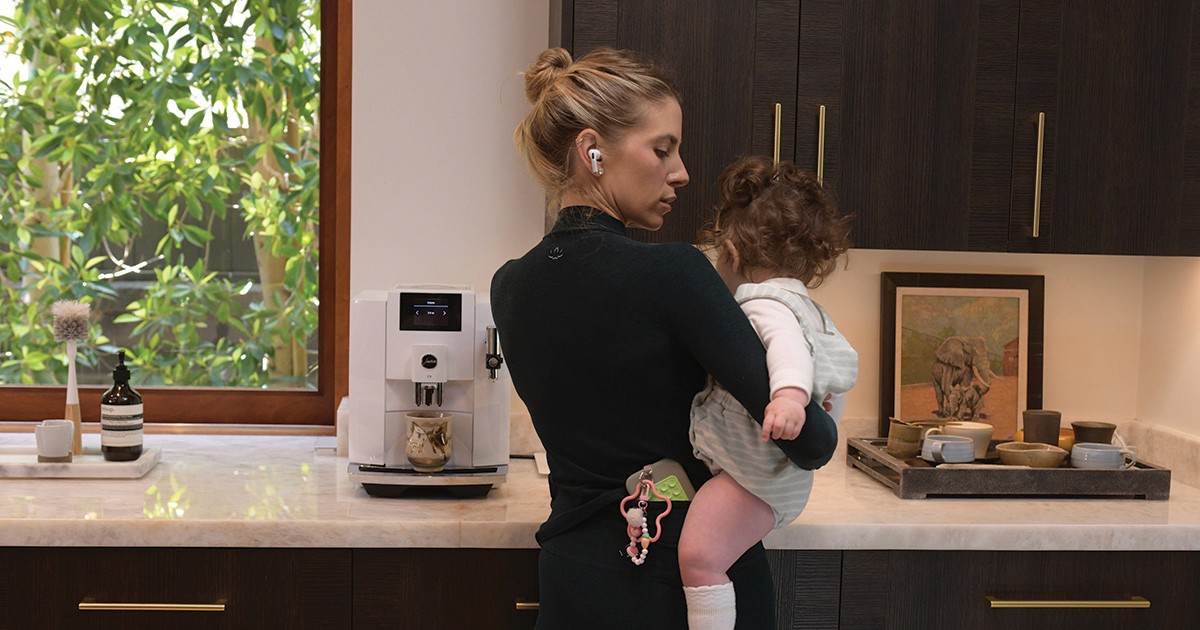
Overstimulation in adults can feel surprisingly ordinary. It may show up as irritability, difficulty concentrating, sensitivity to noise or conversation, mental fatigue, or simply reaching a point where one more ordinary request feels like too much. For me, it often shows up before I have a word for it. I realize I have been holding my breath, I am more impatient than I normally am, or one more request suddenly feels like too much. What I have learned to notice is that “too much” can be its own useful signal. Sometimes the amount of input coming in has simply exceeded the capacity I have available in that moment, and that capacity changes. A busy room, a full inbox or another question can feel completely manageable one day and impossible the next, depending on how much I have slept, how much I am already carrying and how long I have been taking things in.
I think that is part of why the idea of overstimulation is resonating with so many of us right now. The word itself seems to be everywhere. The language of wellness has shifted from relaxation toward regulation, and searches are rising for “overstimulated.” At the same time, we are seeing a fascination with digital detoxes, phone-free spaces, analog experiences, quiet rooms and anything that promises a little relief from the constant stream of input. I understand the appeal, but the question underneath all of it feels more interesting to me: Why does ordinary life suddenly feel like too much, even when nothing particularly dramatic is happening?
That question feels especially relevant because most of us are not walking around in obviously extreme environments. We are getting children out the door, answering emails, moving between meetings, making dinner plans, responding to texts, remembering what needs to be ordered, returned, scheduled or handled. We can be functioning perfectly well on the outside while reaching capacity inside. Nothing has necessarily gone wrong. There can simply come a point when every additional thing seems to arrive on top of everything else.
What Does Overstimulation Feel Like?
There is no single experience of overstimulation, and I would be wary of turning it into another diagnosis we give ourselves. In everyday life, people often use the word to describe the point when sensory, cognitive, social or emotional input begins to feel like more than they can comfortably take in. For me, it is easier to recognize in ordinary moments than dramatic ones. I am unusually impatient with a question I would normally answer without thinking; I lose my train of thought halfway through a sentence, everything seems louder than it did an hour ago, or someone asks me to make a very simple choice and I suddenly do not want to make one more decision.
For someone else it may look different. Overstimulation can show up as irritability or unusual sensitivity, difficulty concentrating, brain fog, wanting to withdraw, becoming unusually bothered by noise or conversation, or feeling as though your mind has simply stopped accepting new information. There can be physical signs too, including muscle tension, shallow breathing, headaches or sudden fatigue. None of those experiences belong exclusively to overstimulation, and I don't think a checklist can tell someone definitively what is happening inside them. What feels more useful is recognizing when something has changed from your own baseline.
There is some overlap with sensory overload, which more specifically describes sensory input such as sight, sound, smell, taste or touch becoming overwhelming enough to produce a physiological response. I would not draw an overly rigid line between the terms because overstimulated has come to describe something broader in ordinary language. Sometimes the sensory environment really is too much. Other times it is the accumulation of information, decisions, conversations and unfinished tasks. Often several of those things are happening at once.
The part I find most useful is that the same amount of input can feel completely different depending on the day. We tend to look almost entirely at what is happening around us: how loud the room is, how many notifications have come in, how many people need something. But available capacity is the other side of the experience. If I haven't slept well, have been moving from one responsibility straight into another, or have already spent the day making decisions and responding to people, I know I have less room. The environment can be exactly the same and land completely differently.
Sometimes recognizing I have less capacity today is enough. I don't always need to search for a deeper emotional explanation or turn the moment into another exercise in understanding myself. There are times when the most accurate thing I can know is that I am depleted, and the useful response may be to stop asking myself for greater insight when I barely have room for the next email.
Overstimulation Is Also About Fragmentation
A loud concert I chose to attend can feel wonderful. Dinner with ten friends can be energizing. A piece of music can completely hold my attention rather than overwhelm it. Meanwhile, five Slack messages, a text from my child, an email notification, someone asking me a question and a task I have not finished can feel unbearable even though none of them is particularly intense.
That distinction has made me think differently about overstimulation. Intensity is not the same thing as fragmentation. One immersive experience can ask a great deal of our attention without dividing it. What becomes exhausting is often the switching: notice this, answer that, remember what you were doing before, return to it, get interrupted again. Each interruption may seem insignificant, but that repeated switching of attention has a cost. A collection of very small demands can leave us feeling much more depleted than any one of them seems capable of causing.
This is one of the stranger things about modern life. So many of the inputs competing for us are tiny. A notification lasts a second. A text takes thirty seconds to answer. Checking one email barely seems worth counting. But the experience of moving in and out of all of them is different from giving the same amount of time to one thing. We can reach the end of the day feeling as though we have been busy every minute without being able to identify one particularly overwhelming event.
Sometimes I don't need silence. I need fewer things competing for my attention. Those are not necessarily the same thing. I may want music. I may want movement. I may want one conversation that has my full attention instead of three conversations I am only half following. One intentional input can feel completely different from fifteen fragmented ones, which is why I don't think the answer to overstimulation can always be framed as simply reducing stimulation.
We Keep Responding to Too Much Input With More Input
More advice, more tracking, more wellness protocols, more things to remember to do. I understand the impulse because I have tried many of them myself, and some are genuinely useful. But when I am already at capacity, being given ten more things I could be doing for myself can become its own kind of demand. Should I meditate, journal, walk, breathe, put my phone away, find the right playlist, stretch, track my sleep, do some kind of nervous-system exercise, go outside? At a certain point, even wellness begins asking me to make more decisions.
I think this may explain some of the current pushback against optimization culture too. There is a growing interest in simpler practices and less measurement, an anti-optimization wave that feels connected to the same fatigue. We have more information about ourselves than we have ever had, which can be incredibly useful, but information also creates something to interpret. A sleep score can tell me something about my sleep and also become another number I am thinking about at breakfast. A practice can support me and also become one more thing I believe I am supposed to be doing correctly. The difference often seems to be whether something reduces the number of things I am carrying or quietly adds itself to the pile.
I have become more interested in what we can remove, narrow or make simpler when we are already at capacity. Sometimes that genuinely means less input. I can close the door, finish one thing before opening another, put down my phone or tell someone I don't have room for another request. Other times I want movement or sound. I may need to finish the thing that has been occupying part of my attention all day, or have the one conversation I keep mentally rehearsing instead of continuing to carry every possible version of it. There isn't one correct response because “too much” does not always come from the same place. That mental rehearsal can also become its own form of overthinking, especially when we’re trying to resolve something we cannot fully control.
The question I come back to is much simpler: What do I need next? It may be quiet. It may be one clear task. It may be movement, a boundary, a conversation or a piece of music. I am less interested in prescribing the answer than in reducing the distance between recognizing that I am full and understanding what might actually help.
Technology Can Have an Ending
I am very aware of the irony of building technology in a conversation about overstimulation. We already have more technology asking for our attention than most of us know what to do with, and much of it is exceptionally good at keeping us there. Another notification leads to another screen, another article leads to another recommendation, another video begins before we have even decided whether we want one. What interests me is whether technology can be designed around a different relationship with attention. A technology company for the inner life should not necessarily measure its value by how long it can keep someone's attention.
This was intentional in how we built Thea. One of the problems we were specifically trying to reduce was decision fatigue. When someone already feels full, asking her to decide which meditation, playlist, breath pattern, mood category or wellness tool she needs can become part of the problem. There are no playlists to browse through, no endless scrolling to find the “right” practice, no score to improve and no streak asking you to return for the sake of maintaining a record. Thea deliberately narrows the path so that once you begin, you are not continually being asked what you want to do next.
Voice has a slightly different role in this conversation than the one I usually talk about. Voice lets someone enter the practice before requiring them to organize themselves. I don't first have to know exactly what I feel, decide which intervention I need or construct the right request. I can start speaking. Thea listens for emotional qualities in my voice, offers a reflection of what may be present, and I decide whether it feels true. From there I make the simple choice to Sit With It or Shift With It, and the practice moves through breath and sound without sending me back into another menu of possibilities.
That matters because voice, breath and sound each ask something different of attention. Voice brings it inward. Breath creates a little space around what has just been noticed. Sound then gives the experience movement without returning me to the work of searching and choosing. Sound can add stimulation, which is precisely why the distinction interests me. Not all stimulation asks the same thing of us. When fifteen competing things are pulling at my attention, one intentional piece of sound may function very differently from fifteen fragmented inputs.
Once the practice begins, Thea is deliberately meant to hold your attention. If you leave the app, it pauses. That was a design decision. I don't think the answer to fragmented attention is necessarily asking for less attention. Sometimes it is asking for someone's attention clearly, completely and for a finite amount of time. There is a difference between technology that fragments our attention and technology that asks us to place it somewhere deliberately.
And then the practice ends. There is no next playlist to choose, no score waiting to be improved and no reason to remain simply because the product would like more of your time. An ending means the product is not designed to turn one completed action into another reason to stay inside it. The practice itself deserves your attention. Once it has done its job, it releases it.
That has made me think beyond Thea about what we have come to expect from technology more broadly. We talk constantly about engagement as though more of it is inherently better, when sometimes the successful outcome might be that the person leaves. What would technology look like if its job were occasionally to give your attention back? To me, that is a much more interesting question than how to make another product sticky.
Overstimulation gives language to something many of us recognize before we fully understand it. Sometimes there is simply too much coming in. Sometimes our available capacity has changed. Sometimes our attention has been divided into so many small pieces that one more completely ordinary request suddenly feels impossible. Those are different experiences, and recognizing the difference may be more useful than immediately reaching for another protocol.
The answer does not always have to be silence, and it does not always have to be calm. Sometimes I need fewer things competing for my attention. Sometimes I need one place for it to go. That is the relationship with attention I wanted Thea to create: somewhere to place it deliberately for a few minutes, and then the freedom to return to the rest of my life with a little more of myself available.
signs of overstimulation in adults, what does overstimulation feel like, overstimulation symptoms